
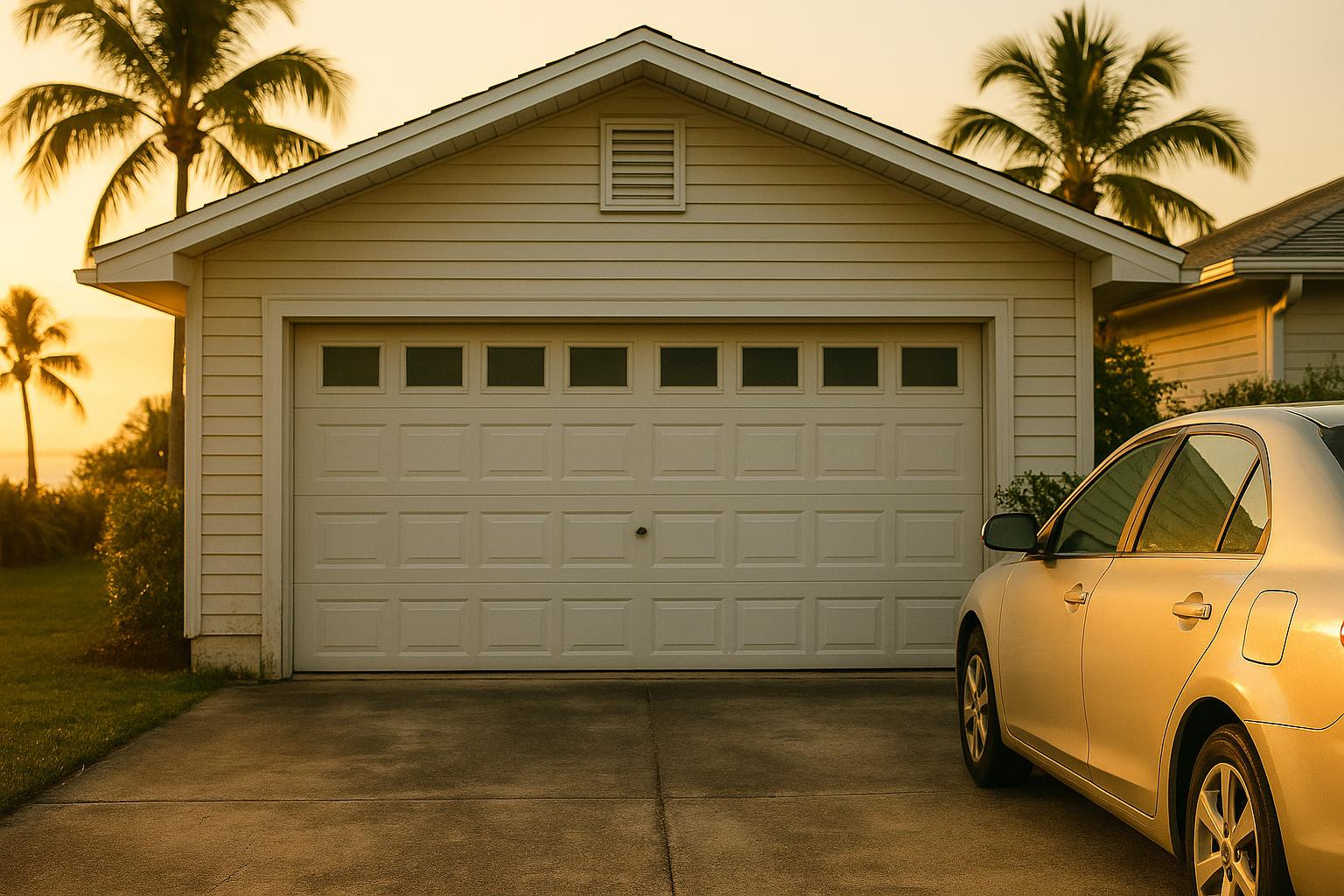
You're Running Late and Your Garage Door Won't Budge
It's a scenario that plays out in driveways across St Augustine Beach more often than you'd think. You press the button on your garage door opener, hear a click or a hum — or maybe nothing at all — and the door stays firmly shut. You're already running behind, the coffee hasn't kicked in yet, and now you're stuck.
Before you panic or start yanking on the door manually, it helps to understand what might be going on. A garage door that won't open in the morning can have several causes, some simple and some that require professional attention. Let's walk through the most common culprits and what you should do about each one.
Dead Batteries in Your Remote or Wall Button
It sounds almost too simple, but dead remote batteries are one of the most frequent reasons a garage door won't respond. If you press your remote and nothing happens — no light on the opener unit, no sound, no movement — try the wall-mounted button inside the garage first.
If the wall button works but the remote doesn't, you likely just need fresh batteries. Most garage door remotes use standard CR2032 coin batteries or AA batteries, depending on the model. Keep a spare set in your glove box or kitchen drawer so you're never caught off guard.
The Opener Is Unplugged or Lost Power
Power outages overnight are common in coastal Florida, especially during storm season. If your garage door opener lost power during the night, it won't respond to any signal until electricity is restored.
Check whether the opener unit's light is on or whether other electrical devices in the garage are working. If you've lost power, you can still open most garage doors manually by pulling the emergency release cord — that red handle hanging from the opener rail. Pull it toward the door to disengage the trolley, and then lift the door by hand.
Important: Only use the manual release when the door is fully closed. Releasing it while the door is partially open can cause it to slam down if a spring is broken or the door is unbalanced.
The Photo Eye Sensors Are Misaligned or Dirty
Every modern garage door opener has two small sensors mounted near the floor on either side of the door opening. These photo eye sensors send an invisible beam across the doorway, and if anything breaks that beam, the door won't close — and in some cases, it won't open properly either.
Over time, these sensors can get knocked out of alignment by a broom, a bike tire, or even a curious pet. They can also get covered in dust, cobwebs, or moisture from our humid St Augustine Beach mornings. Wipe them down with a clean cloth and make sure both sensor lights are steady — typically one green and one amber. If one is blinking, it's likely out of alignment and needs to be adjusted.
Temperature and Humidity Are Working Against You
Florida's coastal humidity can cause metal components to expand, contract, and even develop condensation overnight. If your garage door tracks have moisture buildup or your rollers are sticking, the door may struggle to move first thing in the morning when temperatures are cooler and humidity is at its peak.
This is especially common with older doors that haven't been lubricated in a while. A silicone-based garage door lubricant applied to the tracks, rollers, hinges, and springs can make a noticeable difference. Avoid using WD-40 as a long-term lubricant — it's a solvent that can actually dry out moving parts over time.
The Door Is Off Its Tracks
If your garage door makes a grinding or scraping noise but barely moves, it may have come off one of its tracks. This can happen gradually due to worn rollers, loose brackets, or an impact to the door. A door that's off-track is a safety hazard and shouldn't be forced open or closed.
If you suspect a track issue, stop using the door immediately and call a professional. Attempting to force a misaligned door can cause further damage to the panels, tracks, and opener system.
Broken Torsion or Extension Springs
Your garage door's springs do the heavy lifting — literally. They counterbalance the weight of the door so the opener doesn't have to do all the work. When a spring breaks, the door becomes extremely heavy and the opener motor alone can't lift it.
You might hear a loud bang from the garage overnight, which is often the sound of a torsion spring snapping. In the morning, you'll notice the door won't open or the opener strains and gives up after a few inches of movement.
Do not attempt to replace garage door springs yourself. These components are under extreme tension and can cause serious injury. Spring replacement should always be handled by a trained technician.
The Opener's Lock Mode Is Engaged
Some garage door openers have a lock or vacation mode that disables the remote control. If someone in your household accidentally activated this feature — or if a child pressed the lock button on the wall console — the remote won't work even though nothing is mechanically wrong.
Check your wall-mounted control panel for a lock icon or indicator light. Consult your opener's manual for instructions on disabling lock mode. It's usually as simple as pressing and holding a button for a few seconds.
When to Call a Professional
If you've checked the basics — batteries, power, sensors, and the lock feature — and your door still won't open, it's time to call in a professional. Issues like broken springs, damaged tracks, stripped gears inside the opener, or electrical problems with the motor all require proper tools and expertise to diagnose and repair safely.
At St Augustine Beach Garage & Gate, we handle morning emergency calls regularly. We know that a stuck garage door doesn't wait for a convenient time, which is why we offer prompt service to homeowners throughout St Augustine Beach, Anastasia Island, Crescent Beach, Butler Beach, and the surrounding areas.
Prevent Morning Surprises with Regular Maintenance
The best way to avoid getting stuck in your garage on a Monday morning is to stay ahead of problems before they happen. A preventive maintenance visit once or twice a year can catch worn springs, misaligned tracks, dying opener components, and other issues before they leave you stranded.
During a maintenance visit, a technician will inspect and lubricate all moving parts, test the balance of the door, check sensor alignment, tighten hardware, and assess the overall condition of your system. It's a small investment that saves you from costly emergency repairs and unexpected headaches.
- Lubricate moving parts every six months
- Test the manual release cord periodically
- Replace remote batteries once a year as a precaution
- Keep the sensor lenses clean and unobstructed
- Listen for unusual sounds during daily operation
If your garage door gave you trouble this morning — or if it's been making noises that make you nervous — don't wait for a full breakdown. Contact St Augustine Beach Garage & Gate and let us take a look before a small issue turns into a big one.