
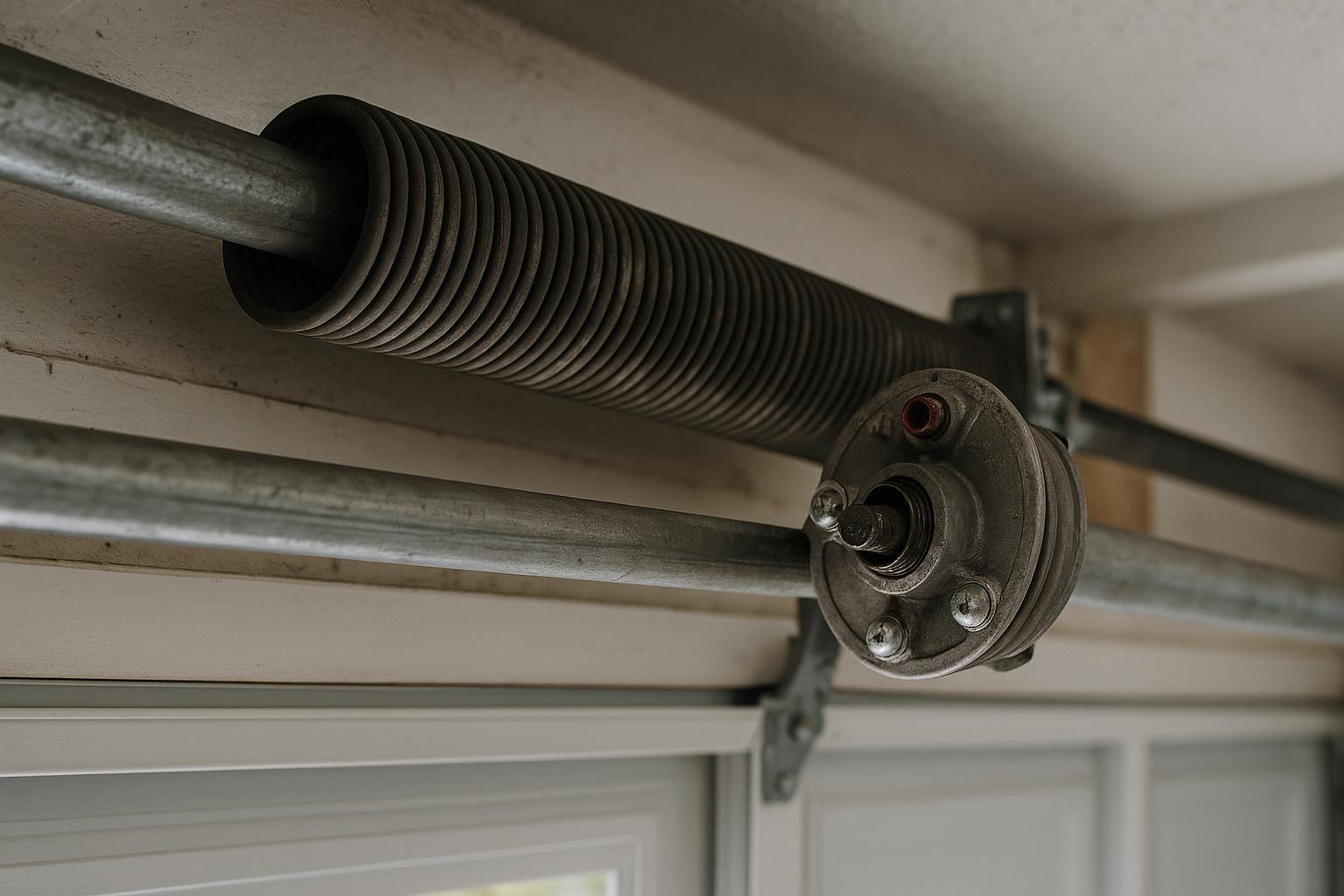
Your Garage Door Springs Are Doing More Work Than You Think
Most homeowners in St Augustine Beach don't think much about their garage door springs — until something goes wrong. But those tightly wound coils above your door are arguably the hardest-working component of the entire system. They bear the full weight of the door every time it opens and closes, which for an average household can mean over a thousand cycles per year.
Garage door springs have a finite lifespan, and when they start to fail, the signs aren't always obvious. A slow decline in performance can be easy to ignore until one morning the door simply refuses to budge. Knowing what to look for can save you from an inconvenient — and potentially dangerous — situation.
The Two Types of Garage Door Springs
Before diving into the warning signs, it helps to understand what you're looking at. Most residential garage doors use one of two spring types:
- Torsion springs: These are mounted on a metal shaft directly above the door opening. They use torque to lift the door and are the more common type in modern installations.
- Extension springs: These run along the horizontal tracks on either side of the door. They stretch and contract to assist with lifting. They're more common on older or lighter doors.
Both types are under extreme tension, which is why spring replacement is one of those jobs best left to professionals. But identifying the problem early? That's something every homeowner can do.
7 Warning Signs Your Garage Door Springs Are Failing
1. The Door Feels Heavier Than Usual
Try this simple test: disconnect your garage door opener by pulling the emergency release cord, then manually lift the door about halfway. A properly balanced door with healthy springs should stay in place on its own. If it feels unusually heavy or immediately slides back down, your springs are likely losing tension.
2. The Door Opens Unevenly or Crooked
If one side of your garage door rises faster than the other, it could mean one spring has weakened or broken while the other is still functional. This is especially common with extension spring systems that have a spring on each side. An uneven door puts stress on the tracks, rollers, and opener, which can lead to more expensive problems down the road.
3. You Heard a Loud Bang From the Garage
A broken torsion spring releases its stored energy all at once, producing a loud bang that many homeowners mistake for something falling or even a break-in. If you heard a startling noise from your garage and then found that the door won't open, check the springs. A broken torsion spring will have a visible gap in the coil.
4. The Opener Struggles or Stops Mid-Cycle
Your garage door opener is designed to assist the springs — not do all the heavy lifting on its own. When springs weaken, the opener has to work much harder. You might notice it straining, moving slower than usual, or stopping partway through a cycle. Running an opener with bad springs is a good way to burn out the motor prematurely.
5. Visible Wear, Rust, or Gaps in the Springs
Take a moment to visually inspect your springs from a safe distance. Look for signs of rust, stretched-out coils, or an obvious gap where the spring has snapped. Here in St Augustine Beach, the coastal humidity and salt air accelerate corrosion on metal components, which means springs may wear out faster than they would further inland. Regular lubrication with a silicone-based spray can help, but it won't stop the inevitable.
6. The Door Slams Shut Instead of Closing Smoothly
Healthy springs control the descent of your garage door, ensuring it closes at a steady, manageable speed. If your door drops quickly or slams the last few inches, the springs aren't providing enough counterbalance. This is a safety concern, especially in homes with children or pets.
7. Your Springs Are More Than 7-10 Years Old
Standard torsion springs are rated for approximately 10,000 cycles, which translates to roughly 7 to 10 years for most households. If your springs are in that age range and you're noticing any of the symptoms above, replacement is likely overdue. High-cycle springs rated for 25,000 or more cycles are available and can be a smart investment, particularly for busy households that use the garage as a primary entrance.
Why You Shouldn't Replace Garage Door Springs Yourself
We understand the DIY spirit — it's part of homeownership. But garage door springs are one of the few home repairs where the risks genuinely outweigh the savings. Torsion springs are wound under hundreds of pounds of tension. Improper handling can result in serious injury or significant damage to your door and property.
Professional technicians have the specialized tools, training, and experience to replace springs safely and correctly. They'll also ensure your door is properly balanced after the new springs are installed, which protects your opener and extends the life of the entire system.
How Often Should You Have Your Springs Inspected?
We recommend having your garage door professionally inspected at least once a year. For homes along the coast — in communities like St Augustine Beach, Crescent Beach, Butler Beach, and Anastasia Island — twice a year is even better. The salt air environment takes a toll on metal components, and catching early corrosion or wear can prevent an unexpected failure.
During a preventive maintenance visit, a technician will inspect the springs, cables, rollers, tracks, and opener. They'll lubricate moving parts, tighten hardware, and test the door's balance and safety features. It's a small investment that can prevent costly emergency repairs.
What to Do If Your Springs Break
If you suspect a broken spring, here's what to do:
- Don't try to open the door — not manually and not with the opener. Operating a door with a broken spring can cause further damage or injury.
- Disconnect the opener if the door is in the closed position. This prevents someone from accidentally triggering it with a remote.
- Call a professional for repair. Most reputable garage door companies, including ours, offer prompt service so you're not stuck for long.
At St Augustine Beach Garage & Gate, we keep our trucks stocked with the most common spring sizes so that most replacements can be completed in a single visit. We serve homeowners throughout St Augustine Beach, St Augustine, Vilano Beach, and the surrounding coastal communities.
Don't Wait for a Complete Failure
Garage door springs rarely fail without warning. The signs are there if you know what to look for — a heavy door, a struggling opener, visible rust, or that telltale bang from the garage. Paying attention to these signals and scheduling timely repairs keeps your garage door safe, functional, and reliable for years to come.
If you've noticed any of the warning signs we've described, or if it's simply been a while since your last inspection, reach out to St Augustine Beach Garage & Gate. We'll take a look, give you an honest assessment, and get your door back in top shape.