
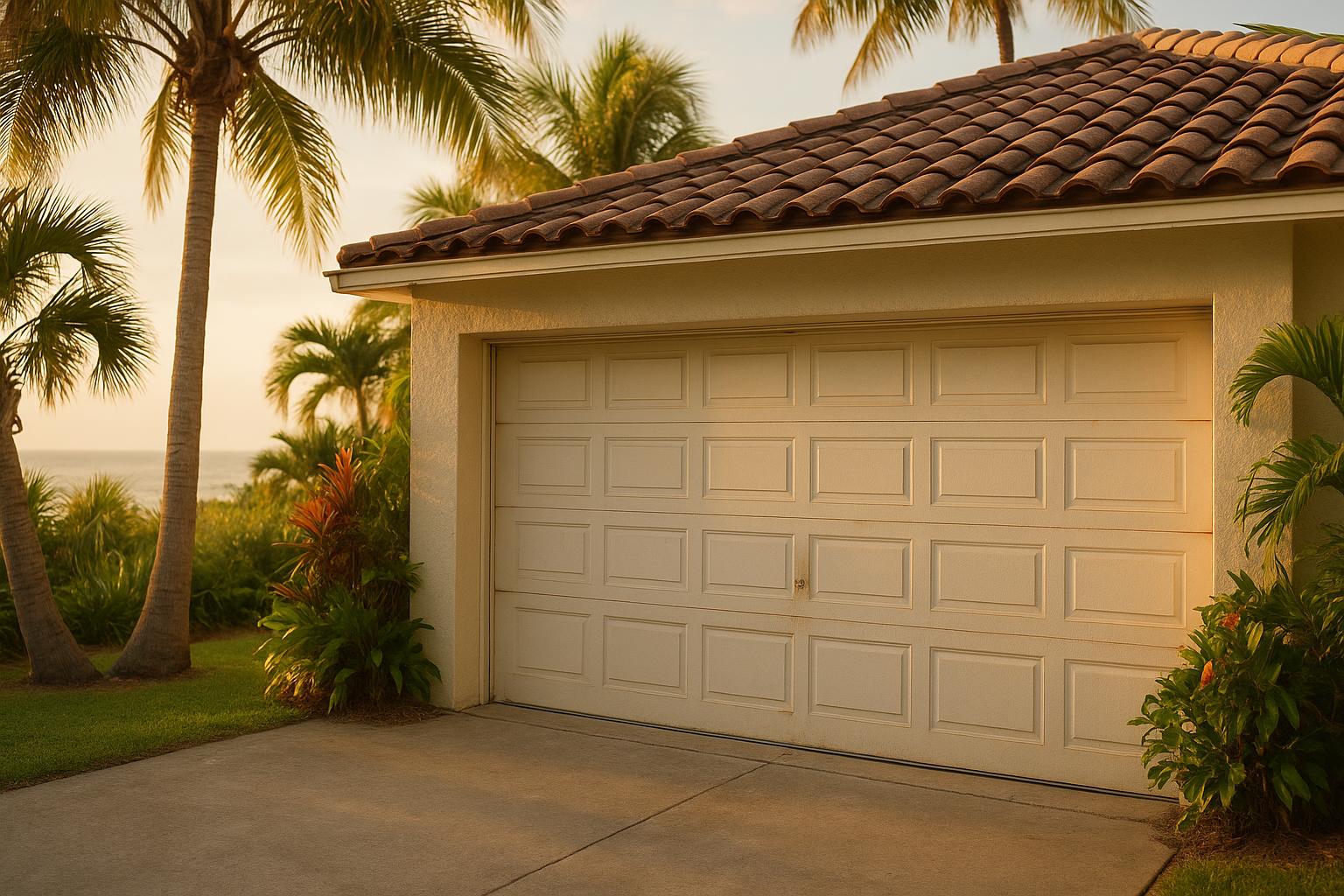
The Hidden Cost of Coastal Living on Your Garage Door
There's no question that living in St Augustine Beach comes with incredible perks — ocean breezes, stunning sunrises, and a laid-back lifestyle that's hard to beat. But that same salty coastal air that makes life here so enjoyable can quietly wreak havoc on your garage door.
Salt air corrosion is one of the most common — and most overlooked — problems homeowners face along the coast. If you've noticed rust spots, stiff hardware, or a garage door that's suddenly noisy and sluggish, the salt-laden atmosphere may be to blame. Here's what you need to know to protect your investment and keep your garage door functioning smoothly for years to come.
Why Salt Air Is So Damaging to Garage Doors
Salt air contains tiny particles of sodium chloride that settle on metal surfaces. When combined with the high humidity we experience here in Northeast Florida, these particles create a corrosive environment that accelerates rust and oxidation far faster than what you'd see in an inland community.
Your garage door is particularly vulnerable because it has so many metal components working together:
- Torsion and extension springs — the high-tension components that lift and lower your door
- Hinges and rollers — the moving parts that guide the door along its tracks
- Tracks — the channels your door travels in
- Hardware and fasteners — bolts, brackets, and screws holding everything together
- The door panels themselves — especially if they're made of steel
When corrosion sets in, it doesn't just look bad. It compromises the structural integrity and function of these parts, leading to breakdowns, safety hazards, and expensive repairs if left unchecked.
Signs of Salt Air Damage on Your Garage Door
Catching corrosion early can save you significant money and hassle. Here are the warning signs to watch for:
Visible Rust or Discoloration
This is the most obvious sign. Check your springs, hinges, tracks, and the bottom edge of your door panels. Rust often starts in small spots and spreads quickly in our coastal environment. Even surface-level discoloration can indicate that the protective coating on your hardware is breaking down.
Squeaking, Grinding, or Unusual Noise
When salt corrosion attacks your rollers and hinges, they lose their smooth operation. If your garage door has become noticeably louder, corroded hardware is a likely culprit — especially if you haven't changed your maintenance routine.
Stiff or Jerky Movement
A garage door that hesitates, sticks, or moves unevenly may have corroded tracks or rollers. Salt buildup in the tracks creates friction that forces your opener to work harder, which can shorten the life of your motor.
Weakened or Brittle Springs
Springs under constant tension are already under stress. Add corrosion to the equation, and they become prone to snapping without warning. A broken spring is not only inconvenient — it can be genuinely dangerous. If your springs look pitted or heavily rusted, it's time to call a professional.
How to Protect Your Garage Door from Salt Air
The good news is that with some proactive care, you can dramatically slow down the effects of salt air corrosion. Here's what we recommend to our customers throughout St Augustine Beach, Anastasia Island, and the surrounding coastal communities.
Rinse Your Door and Hardware Regularly
One of the simplest and most effective things you can do is rinse your entire garage door — panels, tracks, and exposed hardware — with fresh water every two to four weeks. This washes away salt deposits before they have a chance to cause damage. A garden hose is all you need.
Lubricate Moving Parts
Apply a silicone-based lubricant to your springs, hinges, rollers, and tracks at least every three months. In our salty, humid climate here near the coast, quarterly lubrication is the minimum. This creates a protective barrier against moisture and salt while keeping everything moving freely.
Choose Corrosion-Resistant Materials
If you're installing a new garage door or replacing components, consider materials designed for coastal environments. Aluminum doors, fiberglass doors, and doors with marine-grade finishes hold up far better than standard steel in salt air. Stainless steel or nylon rollers are also excellent upgrades over standard steel rollers.
Apply a Protective Coating
For steel doors, keeping the paint or finish in good condition is critical. Paint acts as a barrier between the metal and the corrosive air. Touch up any chips or scratches promptly, and consider applying a coat of automotive wax to your door panels twice a year for added protection.
Schedule Preventive Maintenance
A professional maintenance visit goes beyond what most homeowners can do on their own. During a preventive maintenance appointment, a technician will inspect every component for early signs of corrosion, test spring tension, lubricate all moving parts, tighten hardware, and identify potential problems before they turn into costly repairs.
For homes in Crescent Beach, Butler Beach, Vilano Beach, and other communities close to the water, we typically recommend professional maintenance at least twice a year — ideally in the spring and fall.
When to Replace vs. Repair
Not every corroded component needs to be replaced. Surface rust on tracks or hinges can often be cleaned and treated. But there are situations where replacement is the smarter and safer choice:
- Springs with visible pitting or deep rust — these are at risk of snapping and should be replaced immediately
- Severely corroded tracks — if the track is warped or weakened, repair won't restore safe operation
- Door panels with rust-through — once rust penetrates the panel, patching is only a temporary fix
- Rollers that no longer spin freely — corroded rollers put extra strain on your opener and should be swapped out
If you're unsure whether a component needs repair or replacement, a quick inspection from a qualified technician can give you a clear answer and help you avoid unnecessary spending.
Investing in the Right Garage Door for Coastal Life
If your current garage door is reaching the end of its lifespan and corrosion has taken its toll, a new installation might be the most cost-effective path forward. Modern garage doors designed for coastal climates come with rust-resistant finishes, improved insulation, and better weather sealing — all of which make a real difference when you live steps from the ocean.
At St Augustine Beach Garage & Gate, we help homeowners across St Augustine and the surrounding beaches choose doors that are built to handle our unique environment. Whether you need a quick repair, a spring replacement, or a full installation, we're here to make sure your garage door stands up to everything the coast throws at it.
Don't Wait for Rust to Win
Salt air corrosion is a slow process, but it's relentless. The sooner you start protecting your garage door, the longer it will last and the fewer emergency repairs you'll face. If it's been a while since your last maintenance visit — or if you're already seeing signs of rust and wear — give us a call. We'll take a look, give you honest advice, and help you keep your garage door in top shape for years to come.